The pace of change in business technology is accelerating, and companies that want to stay ahead are turning to next-generation erp crm solutions. In 2026, these platforms are not just tools — they are the engines powering digital transformation, streamlining operations, and driving growth.
In this article, we reveal nine essential erp crm solutions that are redefining how organizations operate. You will discover which platforms lead the market, what makes each unique, and how their features and pricing stack up.
Ready to future-proof your business? Explore the strategic advantages of these erp crm solutions and gain actionable insights to fuel your next move.
The Role of ERP CRM Solutions in Business Transformation
The business landscape in 2026 is defined by rapid change, and erp crm solutions have become the backbone of enterprise transformation. These platforms are more than just software; they are the engines powering innovation, agility, and customer-centric growth.
Understanding ERP and CRM Integration
ERP (Enterprise Resource Planning) and CRM (Customer Relationship Management) systems each serve unique roles, but when combined, they offer a unified approach to managing every aspect of business operations. ERP focuses on internal processes like finance, inventory, and supply chain, while CRM centers on customer interactions and sales.
The true power of erp crm solutions lies in their integration. Unified platforms break down silos, allowing data to flow freely between departments for better decision-making and customer service. For a deeper dive into these advantages, see the Key benefits of CRM and ERP integration—from improved data accuracy to streamlined workflows. As a result, companies can respond faster to market demands and deliver superior experiences.
Key Drivers of ERP CRM Adoption in 2026
Several factors are accelerating the adoption of erp crm solutions across industries. The aftermath of the pandemic pushed businesses to digitize faster, driving demand for cloud-based, unified platforms.
Companies now compete on their ability to leverage real-time data. Advanced analytics, automation, and seamless API integrations have become essential for staying ahead. AI-driven insights help leaders anticipate trends and make smarter choices, making erp crm solutions a must-have for forward-thinking organizations.
Business Challenges Addressed by Modern ERP CRM Solutions
Modern erp crm solutions are designed to address the most pressing business challenges today. They streamline operations by automating repetitive tasks and bridging departmental gaps.
By unifying data, these platforms foster cross-team collaboration and eliminate inefficiencies. Improved customer experience and retention are achieved through personalized engagement and faster service. Complex workflows and compliance requirements are managed with built-in controls, making erp crm solutions indispensable for regulated industries.
Trends Shaping ERP CRM Solutions in 2026
The evolution of erp crm solutions is shaped by several transformative trends. Cloud-native and hybrid deployment models give businesses flexibility and scalability, ensuring systems grow alongside organizational needs.
AI-powered analytics, automation, and hyper-personalized experiences are now standard. Industry-specific modules allow organizations to tailor solutions to unique requirements. Integration with third-party tools and platforms is seamless, making erp crm solutions adaptable for any sector.
Real-World Impact: Case Studies and Statistics
The impact of erp crm solutions is clear in the numbers. According to a 2025 Gartner report, 80% of enterprises using unified platforms experienced a 35% reduction in decision-making time.
A leading manufacturing firm, after implementing erp crm solutions, saw a 50% drop in manual processes and significant gains in efficiency. These real-world examples prove that the right solution can drive measurable business outcomes, positioning companies for long-term success.
9 Essential ERP CRM Solutions Transforming Business in 2026
When it comes to digital transformation, selecting the right erp crm solutions can make or break your business success in 2026. Below, we present nine game-changing platforms, each tailored to specific needs, industry requirements, and organizational goals.
Lolli Group Custom ERP & CRM Solutions
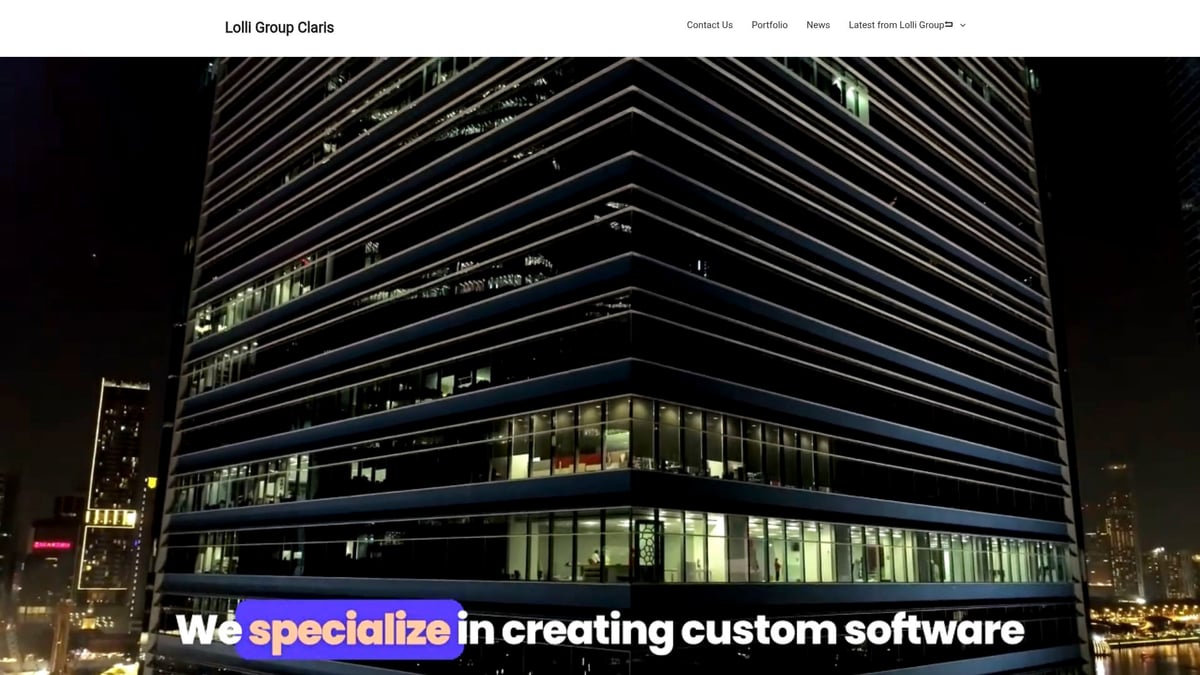
For organizations craving tailored erp crm solutions, Lolli Group delivers fully customized platforms built on Claris FileMaker. Pricing is determined by project scope, ensuring a solution that fits unique business needs.
Core features:
- Bespoke ERP/CRM modules
- AI-driven automation
- Advanced API integrations
- Industry-specific add-ons
Key benefits: Deep customization, scalability, and sector expertise, especially for healthcare, industry, and service sectors. Lolli Group’s certified approach means end-to-end control and strong support for complex workflows.
Target audience: Medium to large enterprises, healthcare, industrial, service companies, call centers, and businesses with intricate processes.
Pros:
- Fully tailored erp crm solutions
- Advanced AI and API capabilities
- Local market expertise
Cons: No fixed pricing, and may not fit small businesses looking for plug-and-play tools.
Curious how custom management software can simplify your business? Discover more in this Custom management software insights guide.
SAP Business One
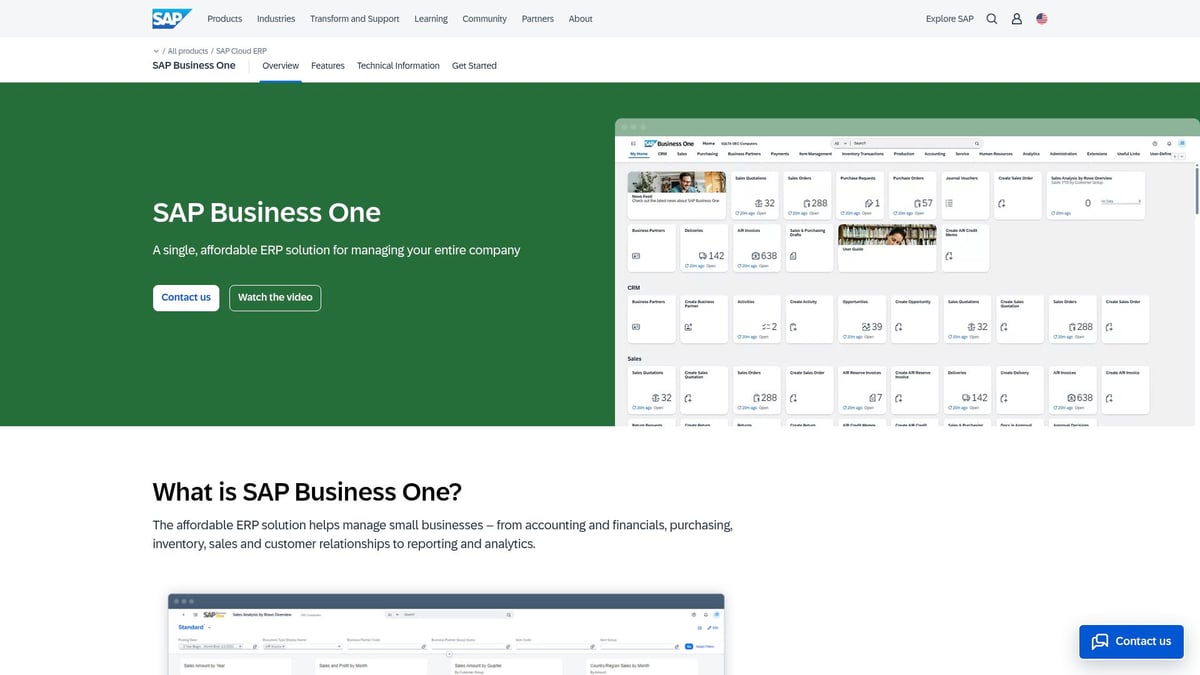
SAP Business One stands out among erp crm solutions for its robust ecosystem and global support. Pricing starts around $94 per user per month for the cloud version, with on-premise options varying.
Core features:
- Financial management
- Sales and CRM
- Inventory control
- Analytics and mobile access
Key benefits: Comprehensive modules, seamless integrations, and the ability to scale as your business grows.
Target audience: Small to mid-sized businesses, especially in manufacturing, distribution, and retail.
Pros: Reliable, scalable, and feature-rich.
Cons: Implementation can be complex, and customization drives up costs.
SAP Business One is ideal for organizations seeking established erp crm solutions with broad industry support and a proven track record.
Zoho CRM Plus
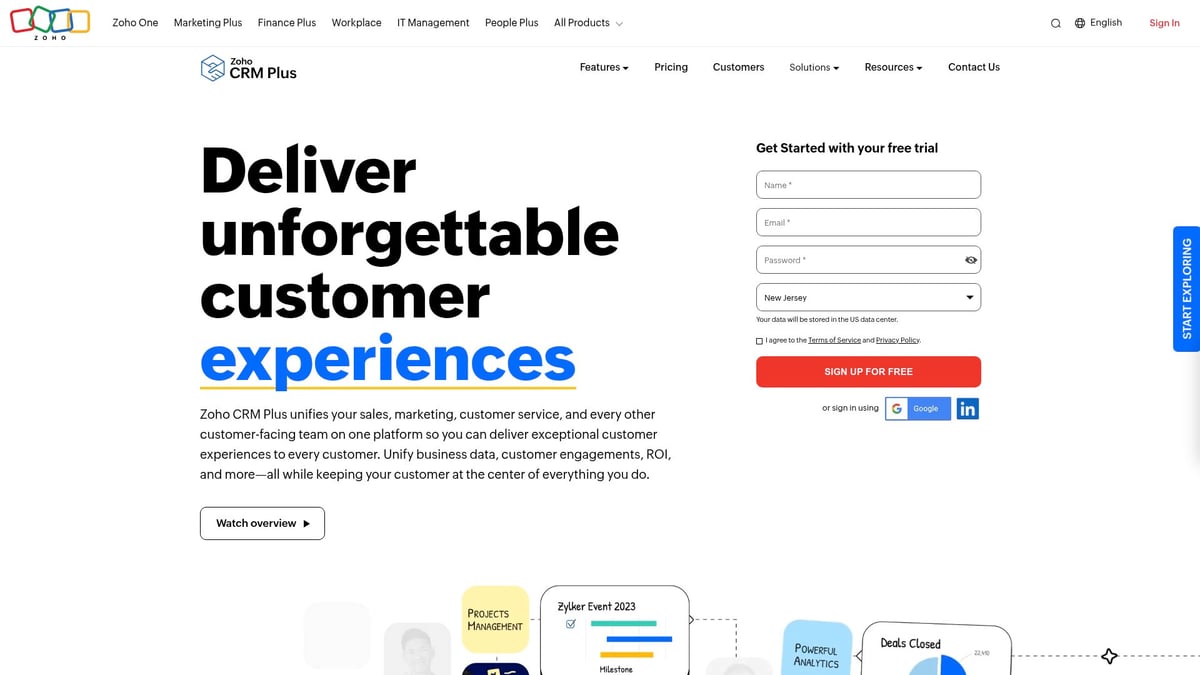
Zoho CRM Plus offers a unified erp crm solutions approach at $57 per user per month (billed annually). It’s designed for businesses prioritizing customer experience and automation.
Core features:
- Sales automation
- Multichannel marketing
- Advanced analytics
- AI-powered insights
Key benefits: Delivers a seamless customer journey, affordable pricing, and a wide range of integrations.
Target audience: Small and medium enterprises, startups, service-based companies.
Pros: User-friendly interface, strong automation, cost-effective.
Cons: Lacks deep ERP features, and advanced customization can be challenging.
Zoho CRM Plus is perfect for companies seeking erp crm solutions that blend affordability with powerful automation.
Microsoft Dynamics 365
Microsoft Dynamics 365 redefines erp crm solutions with modular apps, AI, and flexible deployment. Pricing starts at $65 per user per month for CRM; ERP modules are sold separately.
Core features:
- Modular ERP and CRM apps
- AI and automation
- Power BI analytics
- Cloud and on-premise options
Key benefits: Seamless integration with Microsoft 365, strong analytics, and robust security.
Target audience: Mid-sized to large enterprises across industries.
Pros: Highly customizable, deep integration, secure.
Cons: Steep learning curve, costs can add up with add-ons.
Dynamics 365 is a go-to for businesses needing adaptable erp crm solutions that scale and integrate deeply with existing Microsoft tools.
Oracle NetSuite
Oracle NetSuite leads the cloud-native erp crm solutions space, with custom pricing (averaging $99 per user per month plus a base license).
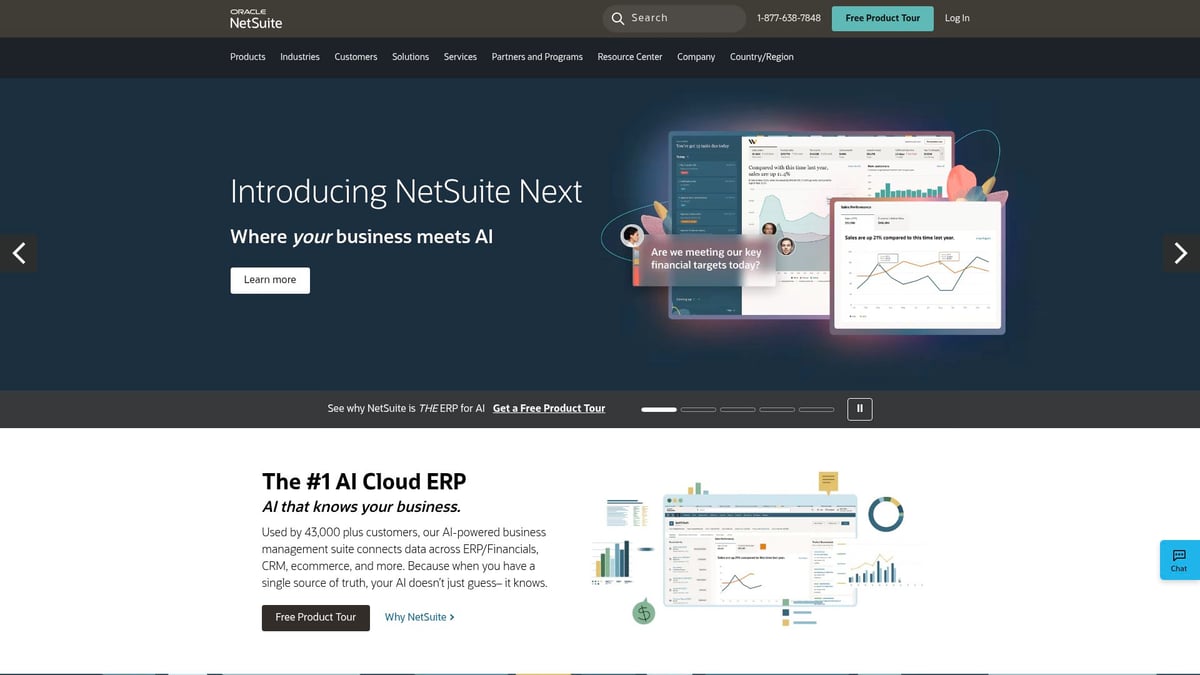
Core features:
- Financials and CRM
- ECommerce and supply chain
- Project management
- Real-time analytics
Key benefits: Global scalability, real-time visibility, comprehensive suite.
Target audience: Mid-sized to large businesses, global enterprises.
Pros: All-in-one erp crm solutions, strong reporting, industry-specific modules.
Cons: Premium pricing, complex implementation.
NetSuite is ideal for businesses aiming for unified, scalable erp crm solutions that support growth and global operations.
HubSpot CRM & Operations Hub
HubSpot CRM & Operations Hub brings accessible erp crm solutions, starting with a free plan and paid options from $50 per month.
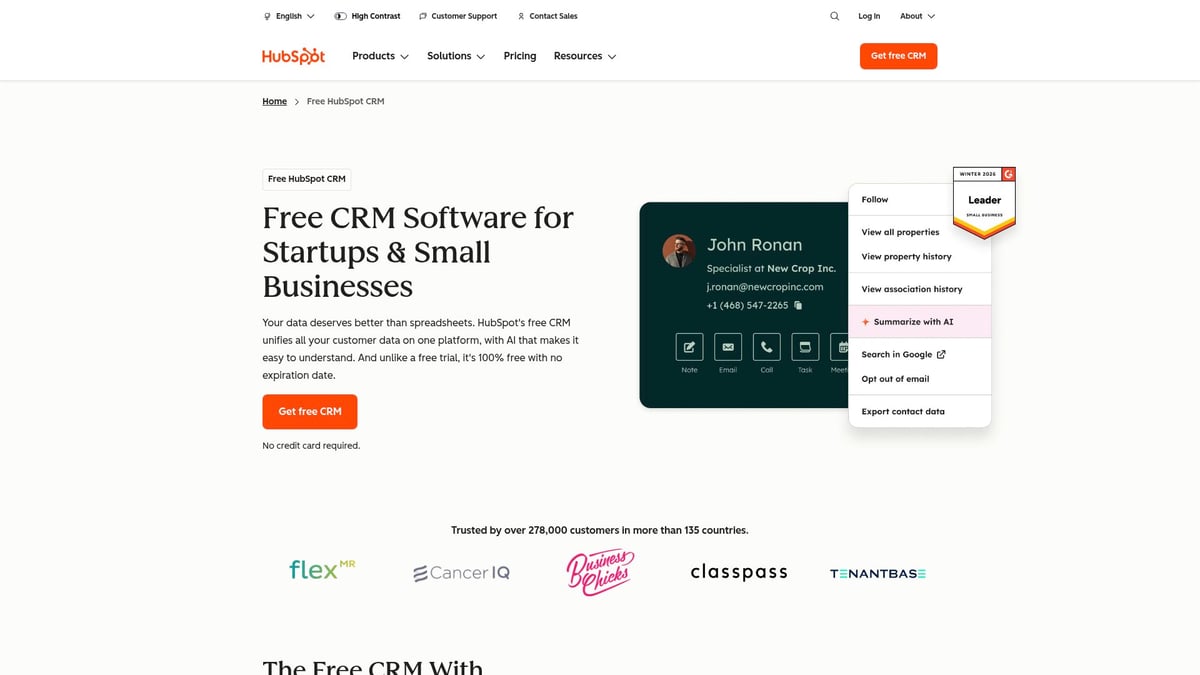
Core features:
- CRM and sales automation
- Marketing tools
- Operations automation
- Custom reporting
Key benefits: Rapid deployment, intuitive UI, and powerful marketing integration.
Target audience: Startups, SMEs, marketing-focused organizations.
Pros: Easy to use, scalable, extensive ecosystem.
Cons: Limited ERP capabilities, advanced features require premium plans.
HubSpot is best for businesses seeking simple, scalable erp crm solutions with strong marketing support.
Infor CloudSuite
Infor CloudSuite is an industry-specific erp crm solutions platform with custom pricing based on deployment and modules.
Core features:
- Deep industry modules
- AI and analytics
- Supply chain management
- Cloud-native deployment
Key benefits: Tailored vertical solutions, robust analytics, flexible cloud options.
Target audience: Manufacturing, distribution, healthcare, and public sector.
Pros: Industry focus, flexible deployment, strong analytics.
Cons: Configuration complexity, premium pricing for specialized modules.
Infor CloudSuite is the choice for organizations demanding erp crm solutions tailored to their vertical and operational complexity.
Salesforce CRM + FinancialForce ERP
Salesforce CRM, paired with FinancialForce ERP, delivers best-in-class erp crm solutions. Salesforce CRM starts at $25 per user per month; FinancialForce ERP pricing is available upon request.
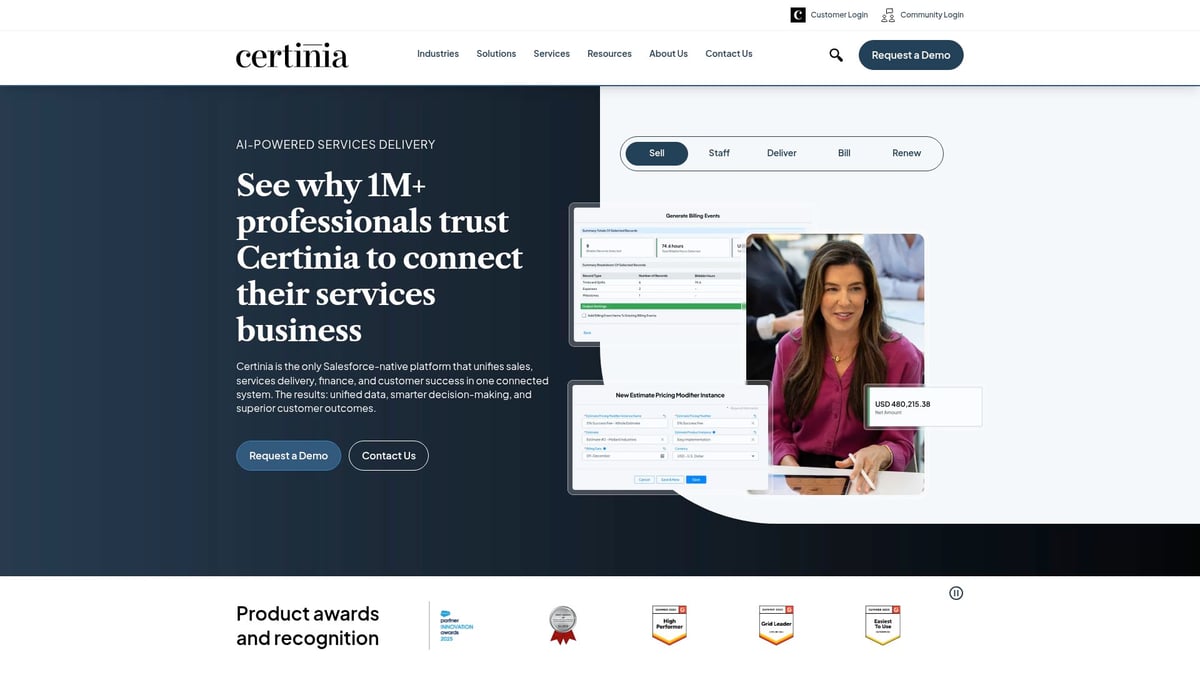
Core features:
- CRM and financial management
- Project automation
- AI insights
- Mobile access
Key benefits: Unified customer and financial data, extensive app marketplace, powerful analytics.
Target audience: High-growth companies, professional services, and firms seeking integration.
Pros: Market leader, rich integrations, analytics.
Cons: High total cost, requires skillful administration.
Salesforce and FinancialForce ERP are ideal for ambitious businesses wanting top-tier erp crm solutions with unmatched flexibility.
Odoo ERP & CRM
Odoo offers one of the most flexible erp crm solutions, with a free community version and paid plans from $24.90 per user per month.
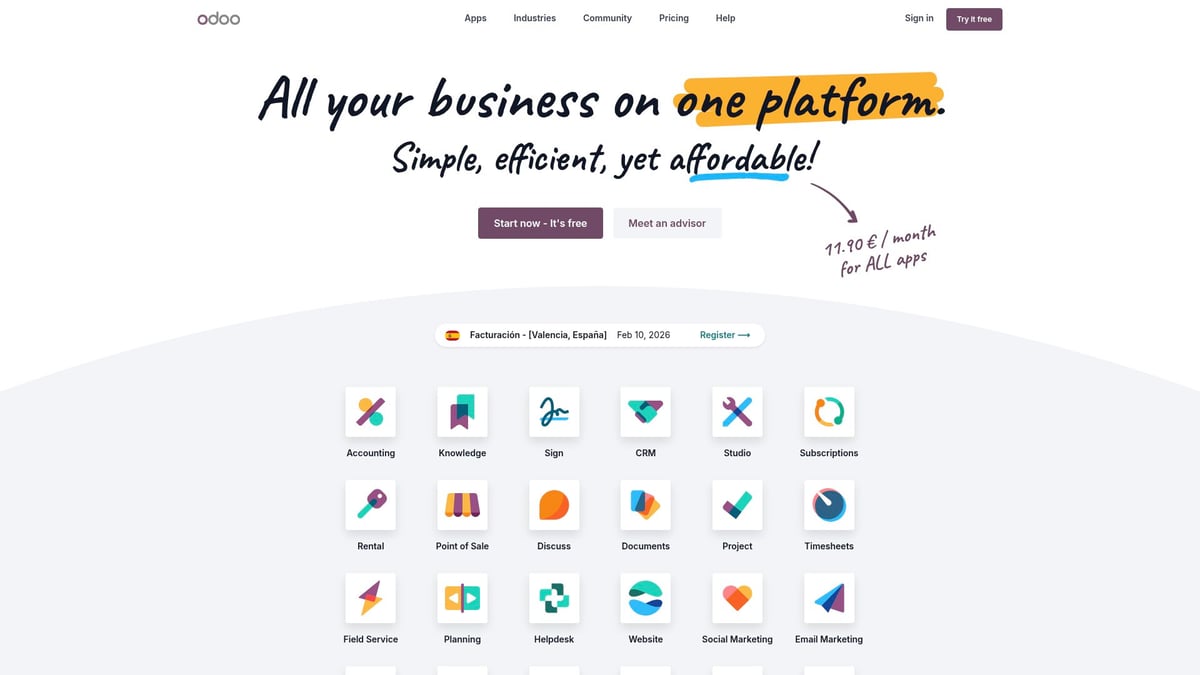
Core features:
- Modular ERP and CRM
- Accounting and inventory
- ECommerce and HR
- Wide app ecosystem
Key benefits: Open-source flexibility, modular approach, active community.
Target audience: SMEs, startups, open-source advocates.
Pros: Highly customizable, affordable, vibrant support community.
Cons: Technical expertise required, support varies by plan.
Odoo is a top choice for businesses that want affordable, open-source erp crm solutions they can tailor as they grow.
How to Choose the Right ERP CRM Solution for Your Business
Selecting the ideal erp crm solutions can feel overwhelming, but breaking the process into clear steps makes it manageable. By focusing on your business's unique needs, comparing features, considering costs, and evaluating support, you can confidently invest in a platform that drives growth and efficiency.
Assessing Your Business Needs and Growth Plans
Start by mapping out the specific pain points your organization faces. Are manual processes slowing you down? Is customer data scattered across departments? Identifying these gaps helps clarify what you need from erp crm solutions.
Next, envision your growth trajectory. Will you expand into new markets or add product lines? The right erp crm solutions should not just solve today’s problems but also scale with your ambitions. For a deeper dive into how business management software supports these goals, refer to Business software applications explained.
Discuss with stakeholders to gather input from all departments. This ensures your chosen system meets cross-functional needs and aligns with your company’s long-term vision.
Evaluating Core Features vs. Customization
Once needs are clear, compare erp crm solutions based on their essential features. Does the platform offer robust sales automation, inventory management, and analytics? List your must-haves and see which vendors deliver them out of the box.
Customization is another critical factor. Some erp crm solutions provide industry-specific modules or flexible APIs, letting you tailor workflows to fit your business. Others offer more standardized setups, which can speed up deployment but may require process changes.
Make a table to weigh the pros and cons of each option:
| Feature | Out-of-the-box | Customizable | Industry Modules |
|---|---|---|---|
| Vendor A | ✔️ | ✔️ | ✔️ |
| Vendor B | ✔️ | ❌ | ❌ |
Prioritize solutions that balance prebuilt functionality with the ability to adapt as your business evolves.
Budget Considerations and Total Cost of Ownership
Budget plays a pivotal role in selecting erp crm solutions. Beyond the upfront license cost, factor in implementation, training, and ongoing support. Subscription-based models might seem affordable initially, but long-term expenses can add up.
Don’t overlook free or open-source options, especially for small businesses or startups. Explore options like the Free ERP management solution to test features before committing. Evaluate hidden costs such as customization, integration, and any premium modules you may need in the future.
Compare different pricing structures, and ask vendors for a detailed breakdown. This helps you avoid surprises and ensures a solution that fits your financial strategy.
Implementation, Support, and Vendor Ecosystem
Successful adoption of erp crm solutions depends on seamless implementation and reliable support. Assess the complexity of migrating your data and processes. How much downtime can your business tolerate? Look for vendors with proven onboarding processes and clear migration plans.
Support is equally vital. Does the provider offer 24/7 help, training resources, or a vibrant user community? A strong partner network can make a huge difference if you need customizations or integrations later.
Finally, research the vendor’s track record and ecosystem. Engage with existing users, read testimonials, and ensure the company is committed to ongoing innovation. This diligence secures your investment for the long haul.
The Future of ERP CRM: AI, Automation, and Beyond
The future of erp crm solutions is being rewritten by rapid advances in artificial intelligence, automation, and smart integrations. Businesses in every industry are reimagining their operations, using these platforms to unlock new levels of efficiency, adaptability, and insight.
AI-driven automation is at the heart of this transformation. Modern erp crm solutions leverage machine learning for predictive analytics, automated workflows, and proactive decision support. According to AI In The ERP Industry Statistics, companies are reporting significant gains in productivity and cost savings as AI becomes deeply embedded in daily business processes.
Low-code and no-code platforms are democratizing development, empowering teams to customize workflows without deep technical skills. API-driven integrations are now essential, allowing erp crm solutions to connect seamlessly with best-in-class apps, data sources, and third-party services. Businesses can adapt quickly, building flexible digital ecosystems tailored to their unique needs.
Emerging trends are shaping the next generation of these platforms. Hyper-personalization, real-time insights, and industry-specific innovation are becoming the norm. The latest Top ERP Trends 2026 AI Automation and Cloud Innovation highlight how cloud-native architectures and AI-powered features will define competitive advantage.
By 2026, more than 70% of organizations are expected to harness AI-powered erp crm solutions for strategic edge, according to the IDC 2025 report. Now is the time to evaluate your platform, embrace smart automation, and position your business at the forefront of digital innovation.