Lolli Group has grown quite a bit. We now have an AI workforce with a CTO, department leads and specialists working on different parts of the business. They are agents, so at least I do not have to buy more desks or explain what happened to the coffee budget.
I wanted more work to get done, with less time spent chasing it. That is why I started organising agents into roles, giving them specific tasks and checking what they actually delivered.
And yes, I understand why this makes people uncomfortable. Those who are worried about AI changing work have a point. But before complaining, I think we should look at the market and make a proper comparison. What can a person deliver for a given budget? What can an agent deliver? How much of either result can I actually use?
What our AI workforce actually does
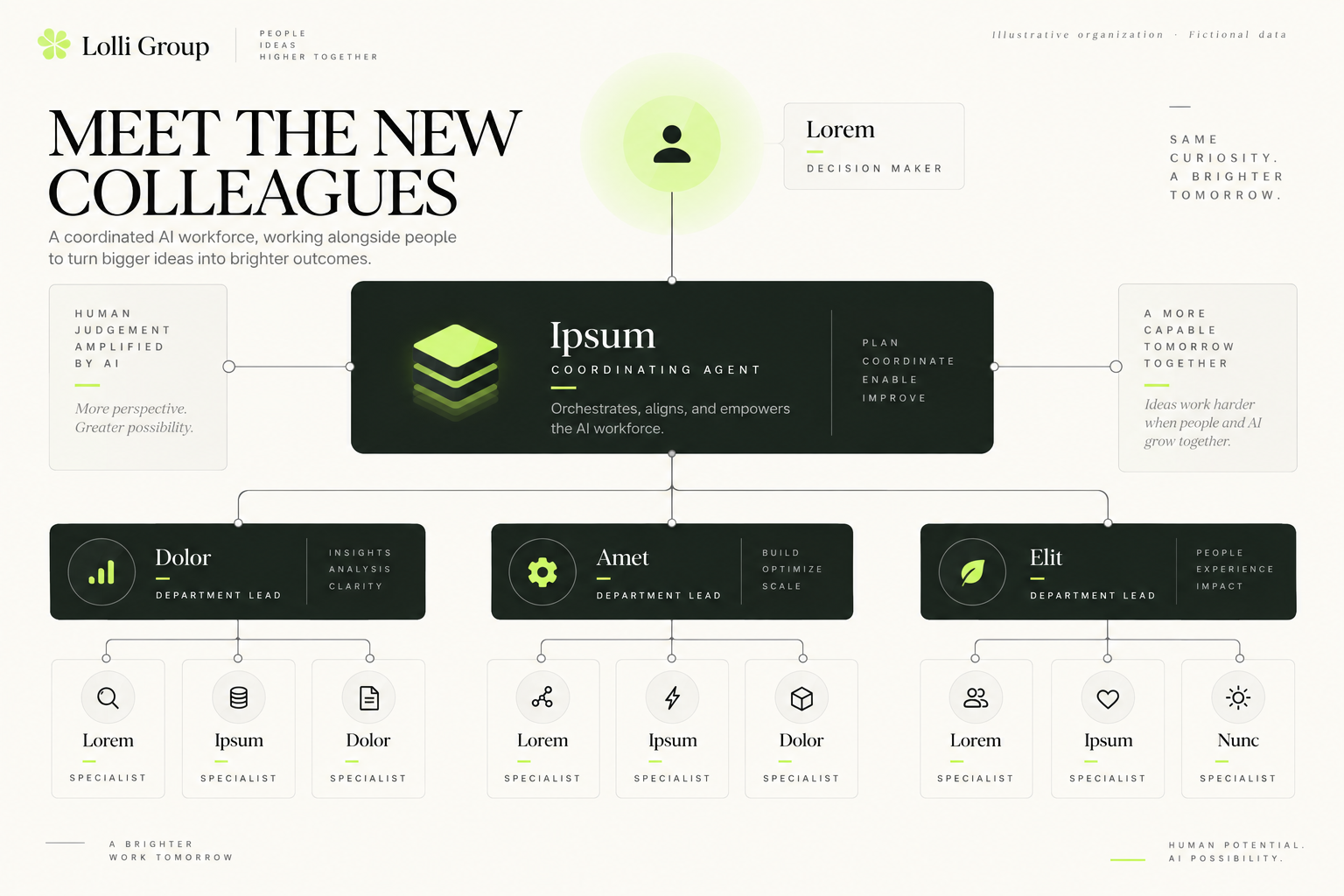
There is a management agent, Lolli CTO, and responsibilities are organised across Development, Operations and Product. Under those departments there are specialist roles for development, databases, testing, infrastructure, documentation, SEO and other activities.
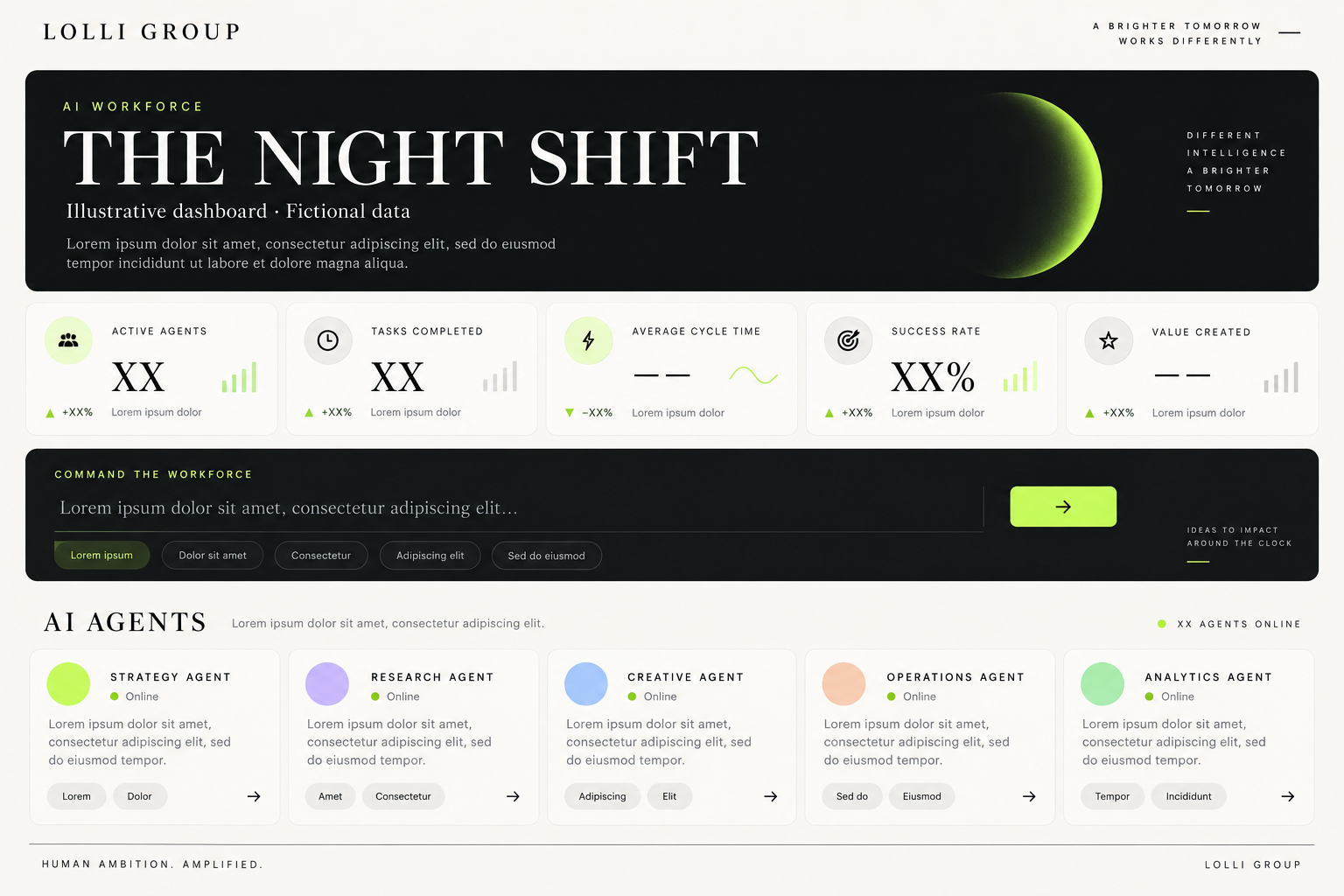
Our control panel lets me see who is assigned to what, the status of the work, what is blocked and where a decision is needed. I want to be able to check those things without opening twenty conversations and trying to remember where we left off.
The point of having a CTO is to coordinate the work. Otherwise I would just have more agents asking me questions, which would be a rather expensive way to give myself another job.
Agents can work during the day, continue overnight or run scheduled checks. They do not get tired of a repetitive task. Of course, this does not mean every agent is running all the time: some are idle, some are blocked, and some need me to intervene. There are also usage limits and infrastructure to deal with. But work can continue without waiting for everyone to be available at the same time.
Where Claris FileMaker fits in
For our business applications, the database platform we use is Claris FileMaker. Lolli Group is a Claris Partner with certified FileMaker development expertise. That is an important part of this work: the agents need useful data and a business process to work with.
A customer record, an order or a job status needs to be correct before an agent can do anything useful with it. If the underlying information is wrong, a faster answer will not help much. My interest is in connecting AI to the applications people actually use, so it can help with real tasks and the result can be checked.
Compare the work, then tell me which one to choose
When people argue against using AI, they often compare it with an excellent professional: experienced, interested in the problem, careful and always available. I would be happy to work with that person too. The question is whether that is the person you can actually find and afford.
Look at what is available within the budget. Give a person and an agent a comparable task, explain what you need, and check the result. Include the time you spend explaining it again, correcting mistakes and following up. That is work as well, even if it does not appear on their invoice.
If I have to chase someone three times and then redo the work myself, what exactly am I paying for?
This is what I mean by mediocre or unwilling help. Someone can earn very little and do excellent work. Someone else can charge a great deal and still leave you with the problem. The price alone tells me very little.
So, when an agent delivers better work, more quickly, within the same overall budget, why should I choose the person who delivers less? As an entrepreneur I have to ask that question. As an employee or collaborator, I would ask it too. If I am responsible for getting something done, I want effective help.
I do not need to claim that AI is better at every job to make that choice. I need to establish that it is better for the work in front of me.
The tokens are not free either
I am quite happy to include the cost of tokens in this comparison. In fact, we should. An agent that keeps running without producing anything useful is wasting money.
But we need the full cost on both sides. For an AI workforce, that includes tokens, tools, infrastructure and my time setting up and checking the work. If something has to be corrected or started again, I count that too.
The useful question is how much it costs to get a result I can accept. A cheap first attempt that leaves me with hours of corrections is not particularly cheap. That applies to people and agents.
There is no fixed rule saying that one agent costs the same as one salary. It depends on what you ask it to do and how you run it. Check the actual spending and the actual output. Then we have something worth discussing.
My clients still need the work done
People raise ethical objections, and some of those concerns are serious. Jobs will change. People will need opportunities to learn. I do not dismiss any of that.
But my clients come to me because they need something to work. They want a problem solved, and often they need it solved quickly. I cannot tell them that the delivery is late because I preferred a less effective way of working on principle.
I am responsible for protecting their data and for the quality of what I deliver. I am also responsible for how I treat the people I work with. None of that requires me to keep paying for poor work when I have a better option.
If the argument is that I should choose slower, less accurate help for ethical reasons, I would like someone to explain who benefits. The client pays more or waits longer. I spend more time correcting things. Where is the improvement?
I still check what the agents have done
An agent saying it has finished is not enough. I want to see the result. If it changed software, does the relevant flow work? If it checked data, did it check the real data? If it found a problem, can it show me where?
AI can misunderstand an instruction, miss something important or give a convincing answer that is wrong. Giving it a department and a job title does not fix that. I need clear instructions, suitable access and checks before accepting the work. Decisions that need my approval still need my approval.
This is also why the dashboard matters. It helps me follow what is happening and where I need to step in. A status marked “completed” still has to correspond to something that was actually completed.
There is plenty of work here for competent people. Understanding a client, deciding what should be built and spotting a bad solution require judgment. I value someone who does that well and uses AI to get more done.
What I find difficult to justify is refusing useful tools while expecting everyone else to accept the delays.
That is where I stand with Lolli Group. I will keep using agents where they improve the work, and I will keep checking them. If a person can do it better, I want that person involved. But I need a reason based on what gets delivered.
The next time someone tells me I should use a person instead, my question will be quite simple: for this task, at this cost, will they do a better job?
Images were generated with AI and reconstructed using fictional labels and data. They do not show live operational or client information.
Want to see where this could help your business?
Tell me what is taking too long, what keeps going wrong, or what you are still doing by hand. We can look at whether AI agents and Claris FileMaker could help, and where it makes sense to start.