Sometimes very small everyday situations reveal something much bigger.
Many companies today struggle with inefficient workflows, poor communication systems and software that technically works but fails to deliver real value.
These problems are often described as customer experience failures or broken business systems. They occur when technology is designed around internal procedures instead of real human workflows.
Understanding why systems fail is the first step toward building better digital tools, more efficient workflows and customer-focused service design.
Not complex infrastructure. Not massive IT projects. Just normal situations: an insurance claim and a simple office coffee machine.
Yet, when observed carefully, these two examples explain a much deeper issue that affects many organizations today.
Too often systems are no longer designed to solve problems for people.
They are designed simply to allow everyone involved to reach the end of the working day.
Customer Experience and Broken Business Systems
In many organizations today, customer experience is not limited by technology but by the way systems are designed. Poor service design, inefficient workflows and outdated communication processes often create friction between companies and their customers.
When business systems are designed without considering the real workflow of the people using them, the result is predictable: inefficiency, frustration and wasted time.
This is why modern companies increasingly focus on customer-centric system design, where technology, communication and workflow optimization work together to improve both internal productivity and customer satisfaction.
When Customer Service Stops Serving Customers
Let’s start with something ordinary: reporting a vehicle accident to an insurance company.
What should be a simple administrative process quickly becomes a small journey through modern organizational inefficiency.
The insurance company is practically unreachable. There are no real phone numbers available. The only possible contact channel is an automated chat system.
The chat is powered by artificial intelligence.
But like many poorly implemented systems, it does not actually solve problems. It simply acts as a filter between the customer and any real human interaction.
Eventually a surveyor is assigned to inspect the vehicle.
The surveyor’s message says that he can be contacted by phone or via WhatsApp to arrange the appointment.
For many professionals today, written communication is actually the most efficient solution. If you are in meetings or working continuously during the day, you may not be able to answer phone calls, but you can easily send a message containing all the necessary information.
So I send a simple WhatsApp message including:
- the inspection location
- the address
- available days
- the contact person on site
Everything needed to confirm the appointment in seconds.

A few minutes later, the phone rings.
The explanation I receive is surprising:
They cannot manage communication via messages because it could generate too many messages from customers.
In other words, the most efficient, traceable and asynchronous communication tool is rejected because it would require better organization.
Instead, the process returns to phone calls, repeated explanations, interruptions during the working day and lost time on both sides.
This raises a simple question:
Are systems designed to solve the customer’s problem, or to simplify the workflow of the organization managing them?
The Coffee Machine That Explains Everything
The second example is even simpler.
An office coffee machine.
At first glance, this may seem irrelevant. But sometimes small design decisions reveal a lot about how systems are built.
The machine uses plastic cups with an unusual shape: narrow at the bottom and wider at the top.

This simple design choice creates two obvious problems:
- the coffee cools down faster
- the center of gravity makes the cup unstable
It becomes very easy to knock over the cup while placing it on a desk.

But there is a second problem.
The machine interface allows users to select different coffee lengths: short, normal, or long.
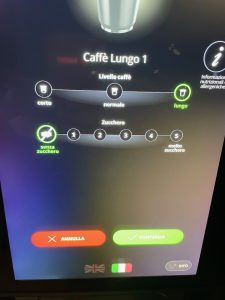
In theory.
Because in practice the machine always delivers exactly the same minimal amount of coffee regardless of the option selected.
The issue has been reported multiple times.
Yet the machine has never been adjusted.
Every day dozens of people use it. Every day the result is the same.
The system technically works, but it does not actually deliver what it promises.
Customer Experience Fails When Systems Are Designed Wrong
At first glance, one might think the issue is technological.
Perhaps the wrong software, the wrong hardware, or the wrong machine.
But the real issue is something else entirely.
The absence of a results-oriented mindset.
When people work with the goal of solving problems, even imperfect systems tend to improve over time.
When the goal becomes simply completing the workday, even advanced systems remain inefficient.
This phenomenon can unfortunately be observed in many sectors where organizational culture prioritizes process over outcome.
The Quality Paradox
There is another interesting paradox.
Professionals who focus on efficiency, clarity and well-designed systems often encounter an unexpected challenge.
Many customers are no longer used to receiving truly well-designed services.
When people experience poorly designed processes for years, they begin to consider them normal.
As a result, the difference between a system built with care and one built only to function minimally becomes harder to recognize.
How Companies Can Fix Broken Systems
Many organizations experience exactly the same problems described in these two everyday stories: inefficient communication, broken workflows and systems that technically work but fail to deliver real value.
Fixing these problems usually requires three things:
- Workflow redesign – understanding how people actually work instead of how processes are imagined on paper
- Better communication systems – asynchronous communication tools that reduce interruptions
- Technology designed around real use cases rather than bureaucratic procedures
When companies redesign systems around real workflows, both productivity and customer experience improve naturally.
Designing Systems That Actually Work
At LolliGroup, this principle is central to everything we build.
Technology should never exist simply to appear sophisticated.
Technology should exist to remove friction and solve real problems.
Whether we are designing:
- custom business software
- ERP systems
- database solutions
- workflow automation platforms
- AI-assisted business processes
our approach always starts with one simple question:
Does this system make life easier for the people using it?
When Broken Systems Start Costing Companies Money
What may seem like small inefficiencies often hide a much bigger business problem.
When communication systems fail, workflows become fragmented and customer experience deteriorates. Employees waste time repeating information, customers lose trust and organizations slowly accumulate operational inefficiencies.
These inefficiencies are rarely caused by a lack of technology. In most cases, the real problem is that systems have been built around internal procedures instead of real human workflows.
This is why many organizations eventually turn to custom system design and workflow automation to rebuild processes that actually support productivity.
Custom Business Systems vs Generic Software
Many companies rely on generic software that forces their teams to adapt to rigid processes.
But when workflows become complex, generic tools often create more problems than they solve.
Custom business systems allow organizations to design technology around their real operations, improving efficiency, reducing manual work and dramatically improving customer experience.
This is why many modern companies invest in tailored platforms such as custom databases, ERP systems, automation workflows and AI-assisted business tools.
About LolliGroup
LolliGroup specializes in building efficient business systems, custom database platforms and workflow automation solutions used by organizations across Europe.
Our focus is simple: improve customer experience, simplify communication and design digital systems that actually support real human workflows.
We help companies design efficient business systems including custom database platforms, workflow automation tools and modern ERP architectures.
If your organization is facing inefficient workflows, broken communication systems or tools that create more friction than value, we would be happy to help.
You can contact us directly here:
You can also explore some of our projects in the LolliGroup portfolio, where we build real-world database and automation systems.
Frequently Asked Questions About Broken Business Systems
Why do many business systems fail?
Most business systems fail because they are designed around internal processes rather than real human workflows. When communication and workflow design are ignored, even good technology becomes inefficient.
How can companies improve customer experience?
Improving customer experience requires redesigning workflows, simplifying communication channels and implementing technology that removes friction rather than creating it.
Can better software fix inefficient workflows?
Yes. Custom software and automation tools can significantly reduce inefficiencies when systems are designed around real business operations.
Good systems should not simply exist.
They should work.