2026 is shaping up to be a turning point for healthcare organizations striving for operational excellence. As the landscape grows more complex, many providers find that outdated systems can no longer keep pace with evolving demands.
Enter filemaker erp healthcare, a solution that empowers providers to streamline workflows, maintain compliance, and deliver exceptional patient care. With customizable features and real-time analytics, these modern ERP systems help reduce costs, boost efficiency, and adapt to any healthcare environment.
This guide delivers a comprehensive roadmap to implementing and optimizing FileMaker ERP in healthcare. Discover practical strategies, expert insights, and future-focused solutions to help your organization thrive in 2026 and beyond.
The Evolving Landscape of Healthcare ERP in 2026
Healthcare is undergoing rapid transformation, and organizations can no longer rely on outdated systems if they want to stay competitive. As 2026 approaches, the push for smarter, more agile solutions is stronger than ever. Filemaker erp healthcare platforms are at the center of this change, helping providers respond to new demands, regulations, and opportunities.
Key Trends Driving ERP Adoption in Healthcare
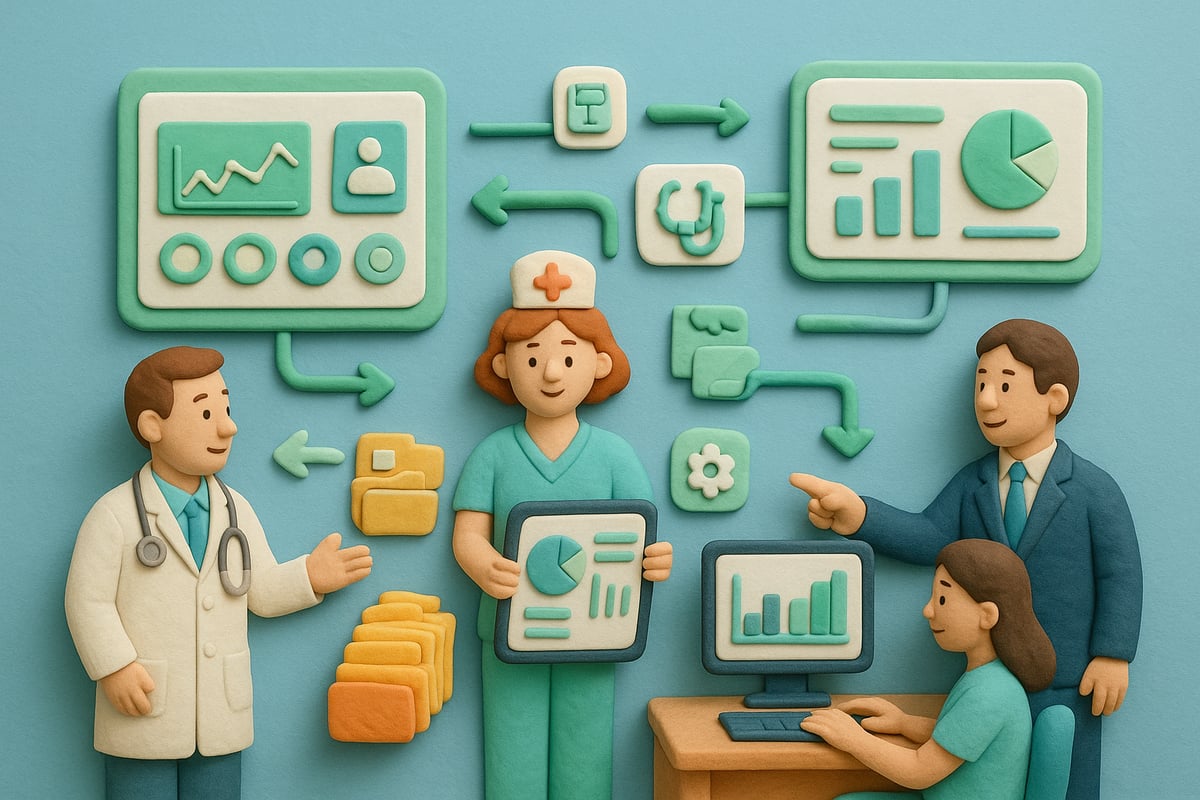
The healthcare sector is embracing digital transformation at an unprecedented pace. Organizations are shifting toward patient-centric care models and personalized medicine, while regulatory requirements like HIPAA and GDPR continue to rise. There is a clear movement to integrate telemedicine and remote monitoring, along with a growing demand for real-time analytics and reporting. Cybersecurity and data privacy are now top priorities, as threats become more sophisticated.
According to recent research, 72% of healthcare providers plan to increase digital investments by 2026. In fact, the healthcare ERP market is projected to double by 2033, highlighting the urgency for modern platforms. With filemaker erp healthcare solutions, organizations can keep pace with these trends, ensuring their systems are both agile and secure.
Challenges with Legacy Systems
Despite the demand for innovation, many healthcare organizations are still struggling with legacy platforms. These outdated systems often lack interoperability, causing siloed data and inefficiencies across departments. High maintenance costs and limited scalability make it difficult to adapt to changing needs. Inflexible workflows prevent process improvements and slow down both administrative and clinical tasks.
Another significant challenge is delayed access to critical patient and operational data, which can impact care quality and regulatory compliance. Security vulnerabilities are also more common in older systems. Filemaker erp healthcare helps address these pain points by offering a modern, unified approach that eliminates silos and supports growth.
The Role of ERP in Addressing Healthcare Pain Points
ERP platforms have become essential tools for centralizing patient records, billing, and scheduling. By automating administrative and financial processes, healthcare teams can focus more on patient care and less on paperwork. Collaboration is enhanced, with care teams able to share information and coordinate tasks more efficiently.
Improved compliance and audit readiness are significant benefits, as ERPs provide real-time tracking and reporting. For example, hospitals using ERP systems report up to a 30% reduction in operational overheads. Filemaker erp healthcare delivers these advantages by streamlining processes and providing actionable insights, allowing organizations to operate at peak performance.
| Pain Point | ERP Solution |
|---|---|
| Siloed data | Centralized records |
| Manual admin tasks | Automated workflows |
| Compliance challenges | Real-time audit trails |
| Inefficient collaboration | Integrated communication tools |
Why FileMaker Stands Out for Healthcare ERP
What sets filemaker erp healthcare apart is its adaptability. FileMaker offers low-code customization, which means rapid deployment and the flexibility to design workflows tailored to any healthcare environment. Whether it's connecting with EHR systems, integrating medical devices, or supporting complex regulatory requirements, FileMaker is built for healthcare’s unique demands.
Seamless integration capabilities allow organizations to connect with existing platforms, while its proven track record in healthcare digital transformation speaks for itself. By choosing filemaker erp healthcare, providers position themselves to thrive in a fast-evolving landscape, confidently meeting the challenges of 2026 and beyond.
Core Features of FileMaker ERP for Healthcare
Modern healthcare organizations need robust, flexible tools to keep pace with regulatory demands, patient expectations, and operational goals. Filemaker erp healthcare delivers a suite of powerful features designed to centralize, streamline, and secure every aspect of clinical and administrative workflows.
Patient Information Management and Security
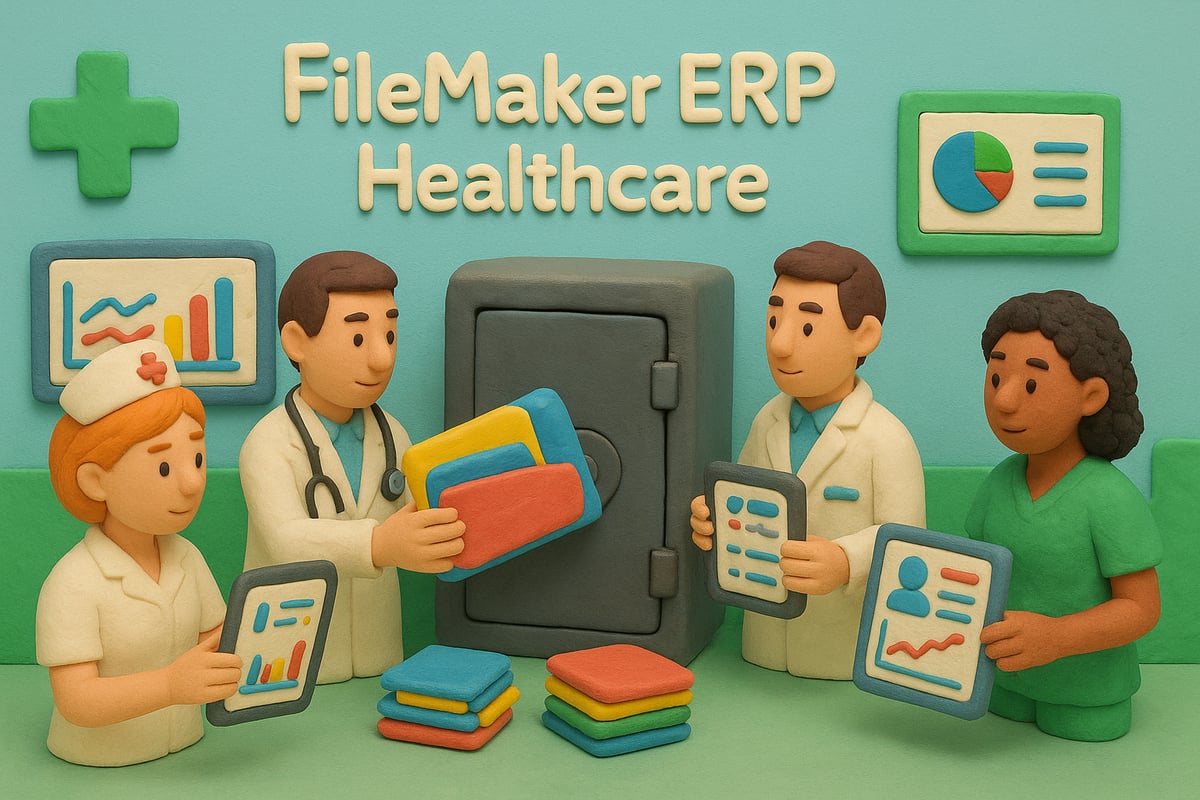
Protecting sensitive patient data is non-negotiable. Filemaker erp healthcare centralizes all patient records in a secure, encrypted database. Role-based access controls ensure that only authorized staff can view or edit confidential information.
Key security features include:
- End-to-end encryption at rest and in transit
- Detailed audit trails for every data access or change
- Customizable access levels for clinical and admin staff
These tools help meet HIPAA and GDPR compliance requirements, building trust with patients and regulators. By prioritizing data privacy from the ground up, filemaker erp healthcare empowers organizations to safeguard their most valuable asset—patient information.
Scheduling, Billing, and Resource Optimization
Efficient scheduling and billing are critical for healthcare success. Filemaker erp healthcare automates appointment scheduling, sends reminders, and manages cancellations in real time. Billing modules streamline claims processing and payment reconciliation, cutting administrative workload by up to 40%.
Additional benefits include:
- Automated inventory tracking for medical supplies
- Real-time resource allocation for staff and rooms
- Error reduction in insurance claims and billing
By integrating these processes, filemaker erp healthcare ensures operational efficiency and accurate revenue cycle management. Clinics and hospitals can focus more on care and less on paperwork.
Customizable Workflows for Clinical and Administrative Tasks
Every healthcare environment is unique. Filemaker erp healthcare offers drag-and-drop workflow builders, letting organizations tailor processes for patient intake, lab requests, discharge planning, and more.
Workflow customization features:
- Integrations with lab, imaging, and pharmacy systems
- Automated alerts for urgent clinical events
- Support for multidisciplinary care coordination
These tools break down silos, enabling seamless collaboration between teams. With filemaker erp healthcare, you can design and refine workflows to match your exact needs—no coding required.
Real-Time Analytics and Reporting
Data-driven decision-making is essential in healthcare. Filemaker erp healthcare provides custom dashboards to monitor clinical and operational KPIs at a glance. Predictive analytics help forecast patient demand, staffing needs, and inventory requirements.
Key analytics capabilities:
- Customizable reporting for compliance and performance
- Real-time monitoring of patient flow and resource utilization
- Automated trend analysis for proactive management
These insights empower leaders to act quickly and confidently. For a deeper understanding of these capabilities, see the FileMaker ERP solutions overview.
API Integrations and Interoperability
Healthcare IT ecosystems are complex, with diverse systems needing to communicate. Filemaker erp healthcare excels in interoperability, connecting with EHRs like Epic and Cerner, insurance platforms, and IoT devices.
Integration highlights:
- Support for HL7, FHIR, and other healthcare data standards
- Seamless API connections for real-time data exchange
- Automated syncing with third-party apps and devices
By bridging gaps between systems, filemaker erp healthcare unlocks new efficiencies and a unified view of patient and operational data.
Step-by-Step Guide to Implementing FileMaker ERP in Healthcare
Implementing filemaker erp healthcare successfully requires a strategic, stepwise approach. Each phase builds on the last, ensuring your organization achieves greater efficiency, compliance, and operational excellence. Let’s break down the process so you can transform your healthcare operations with confidence.
Step 1: Assess Organizational Needs and Set Goals
The first step in the filemaker erp healthcare journey is understanding your organization’s unique requirements. Involve both clinical and administrative stakeholders to capture a broad perspective.
- Conduct a comprehensive needs analysis.
- Define key performance indicators (KPIs) such as patient throughput, cost reduction, and compliance targets.
- Identify integration and scalability needs for future growth.
This groundwork ensures your new system directly aligns with strategic objectives and lays the foundation for measurable success.
Step 2: Choose the Right FileMaker ERP Solution
Next, evaluate which filemaker erp healthcare solution best fits your organization. Consider whether an off-the-shelf or custom-built system aligns with your goals.
- Compare cloud, on-premise, and hybrid deployment options.
- Review vendor support, training resources, and upgrade pathways.
- Explore healthcare-specific platforms like Medical ERP software LollyMed for proven, real-world use cases.
Selecting the right solution gives your team the flexibility and scalability needed to thrive in a demanding healthcare environment.
Step 3: Design and Customize Workflows
Once your filemaker erp healthcare platform is chosen, map out current workflows to pinpoint inefficiencies. Use FileMaker’s low-code tools to tailor modules for clinical and administrative processes.
- Build custom modules using drag-and-drop tools.
- Integrate with lab, imaging, and pharmacy systems.
- Pilot test new workflows with end-users and gather feedback for refinement.
This customization ensures your ERP adapts to the unique needs of your organization, enhancing both productivity and user satisfaction.
Step 4: Integrate with Existing Systems
Seamless integration is essential for any filemaker erp healthcare rollout. Plan a staged migration from legacy systems to avoid disruption.
- Set up API connections with EHR, billing, and lab platforms.
- Ensure interoperability with third-party healthcare applications.
- Map and migrate data carefully to preserve integrity.
Effective integration reduces manual data entry, eliminates silos, and supports a unified healthcare ecosystem.
Step 5: Ensure Compliance and Data Security
Protecting patient data is non-negotiable in filemaker erp healthcare implementations. Implement robust security controls at every level.
- Use encryption for data at rest and in transit.
- Establish role-based access controls and audit logs.
- Conduct regular risk assessments and staff training sessions.
Document all compliance measures to prepare for regulatory audits and foster a culture of accountability across your organization.
Step 6: Train Staff and Drive User Adoption
To maximize value from filemaker erp healthcare, comprehensive staff training is critical. Develop targeted materials and sessions for different user roles.
- Appoint “super users” to champion adoption and provide peer support.
- Collect feedback regularly and iterate on training programs.
- Encourage a collaborative culture that values continuous improvement.
When staff feel confident and supported, adoption rates soar and the benefits of your new ERP are fully realized.
Step 7: Monitor, Optimize, and Scale
The final step in your filemaker erp healthcare journey is ongoing optimization. Set up dashboards to track KPIs in real time and review workflows regularly.
- Analyze system performance and identify areas for refinement.
- Plan for future scalability to accommodate growth and change.
- Example: A mid-sized clinic cut patient wait times by 25 percent within six months of ERP rollout.
By embracing a mindset of continuous improvement, your organization can future-proof operations and maintain a competitive edge.
Integration Strategies: Connecting FileMaker ERP with Healthcare Ecosystems
Connecting your filemaker erp healthcare solution with the broader healthcare ecosystem is essential for future-ready operations. True interoperability unlocks the full power of your ERP, transforming data silos into seamless workflows and actionable insights. Let’s explore smart integration strategies that position your organization for success in 2026.
Achieving Interoperability with EHR and Health IT Systems
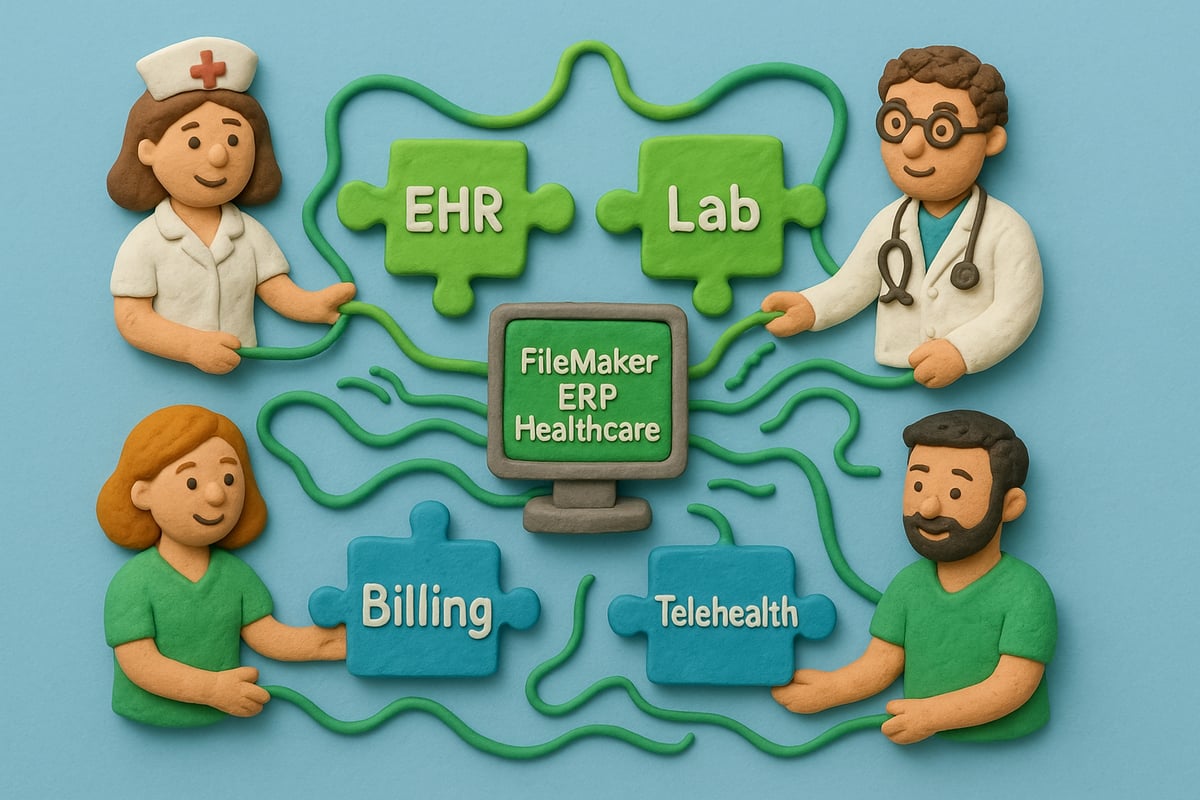
For filemaker erp healthcare platforms, interoperability with major EHRs like Epic, Cerner, or Allscripts is a game-changer. Mapping data flows between these systems means clinicians get timely, accurate information where it’s needed most.
Using HL7, FHIR, and robust APIs, data exchange becomes reliable and secure. For example, clinics integrating filemaker erp healthcare with EHRs have reported up to 20% fewer data entry errors. Discover how automated FHIR tools can further improve clinical data accessibility, making real-time patient data sharing a reality.
Interoperability not only reduces administrative burden but also supports better patient outcomes.
Linking with Medical Devices, Labs, and Imaging
Modern filemaker erp healthcare deployments thrive when seamlessly connected with labs and imaging systems. Automating lab order entry and delivering results directly into the ERP speeds up diagnosis and treatment.
Integration with PACS, RIS, and diagnostic imaging ensures clinicians have a complete view of the patient record. Device data capture from remote monitoring tools can be funneled directly into the filemaker erp healthcare dashboard for actionable alerts.
This integration empowers your care teams to act swiftly and accurately, improving patient safety and satisfaction.
Insurance, Billing, and Claims Processing Integrations
Efficient filemaker erp healthcare solutions streamline billing and insurance workflows. Real-time eligibility checks and automated claims submissions eliminate manual steps, cutting down errors and denials.
Automated payment reconciliation and denial management tools within filemaker erp healthcare save valuable staff time. These integrations help keep financials transparent and up to date, which is crucial for compliance and cash flow.
By centralizing these processes, organizations reduce revenue leakage and improve operational efficiency.
Enhancing Patient Engagement and Telehealth
Today’s patients expect digital convenience. Filemaker erp healthcare systems that integrate with patient portals and telemedicine platforms deliver on that promise.
Secure messaging, appointment scheduling, and virtual visit support keep patients engaged and informed. Integration with telehealth tools ensures care continuity, even outside the clinic.
With these strategies, filemaker erp healthcare fosters a patient-centric experience that meets modern expectations and regulatory demands.
Overcoming Common Integration Challenges
Integration is rarely plug-and-play. Filemaker erp healthcare projects often face data mapping and standardization hurdles, especially when bridging legacy and modern systems.
Ensuring data privacy and secure transmission is vital. Teams must carefully manage legacy constraints while adopting new standards. Regular audits and staff training help maintain security and compliance.
Tackling these challenges head-on ensures your filemaker erp healthcare investment delivers maximum value and resilience.
Ensuring Compliance, Security, and Data Privacy in 2026
Staying ahead in 2026 means healthcare organizations must treat compliance and data security as top priorities. With digital risks on the rise, filemaker erp healthcare solutions are central to building both trust and efficiency. Let’s break down how to keep your operations protected and compliant.
Navigating Regulatory Requirements
Navigating the complex web of HIPAA, GDPR, and local data privacy laws is non-negotiable for any filemaker erp healthcare deployment. Automated compliance checks and audit trails built into FileMaker ERP help organizations stay prepared for audits and regulatory changes.
For example, automated audit logs can cut compliance audit time by up to 40%. With real-time tracking and reporting, your team is always one step ahead. Keeping documentation updated is easier than ever, and regular reviews ensure no regulation is overlooked.
Data Security Best Practices
Protecting sensitive data is critical for every filemaker erp healthcare platform. Start with robust encryption for data at rest and in transit. Multi-factor authentication and role-based access controls further lock down sensitive information.
Regular penetration testing and vulnerability assessments are must-haves. Staff training on privacy protocols is also vital. To see how these best practices are implemented in real-world settings, check out Clinic management with FileMaker for practical examples of secure healthcare workflow automation.
Responding to Emerging Cybersecurity Threats
Cyber risks like ransomware and phishing are growing each year. Filemaker erp healthcare systems must include ongoing monitoring for threats, as well as clear incident response plans.
Disaster recovery strategies and frequent backups are essential. By simulating incident scenarios, your team can respond quickly in an emergency. Staying proactive with the latest security updates is your best defense.
Building a Culture of Compliance
Compliance is more than technology, it’s a mindset. In filemaker erp healthcare environments, leadership should champion regular policy updates and compliance reviews.
Engage staff through ongoing education and clear communication. Encourage everyone to be data stewards, not just IT experts. By making compliance a shared responsibility, your organization is ready for whatever the future brings.
The Future of FileMaker ERP in Healthcare: Innovations and Next Steps
Healthcare organizations are entering a new era of digital transformation. To stay ahead, leaders must invest in the future of filemaker erp healthcare, harnessing cutting-edge innovations that drive efficiency, compliance, and patient outcomes.
AI and Predictive Analytics in Healthcare ERP
Artificial intelligence is reshaping filemaker erp healthcare by unlocking new levels of insight and automation. Predictive analytics can help forecast patient admissions, streamline staffing, and identify anomalies in billing or clinical data.
For example, AI-powered ERP modules can alert clinicians to potential surges in patient demand, guiding resource allocation and reducing bottlenecks. Hospitals leveraging these tools see faster decision-making and improved patient outcomes.
To stay competitive, healthcare organizations should monitor top ERP trends, such as AI integration and low-code automation, as highlighted in Top ERP trends for 2026.
Mobile and Remote Access for Care Teams
Clinicians and administrators require real-time access to information, whether at the bedside or offsite. With filemaker erp healthcare, secure mobile apps empower care teams to retrieve patient records, manage tasks, and communicate instantly.
Mobile access reduces delays and supports on-the-go decision-making. Features like push notifications, electronic signature capture, and instant documentation improve workflow efficiency and patient care.
By embracing mobile-first ERP solutions, healthcare providers can boost productivity and ensure continuity of care across locations.
IoT and Connected Health Devices
The future of filemaker erp healthcare will revolve around seamless integration with IoT and connected health technologies. Wearable devices, remote monitoring tools, and smart medical equipment generate critical patient data that must flow securely into ERP systems.
Automated alerts for abnormal metrics, device-driven medication tracking, and real-time monitoring all become possible with robust IoT integration. This connectivity supports proactive care and reduces manual data entry, further streamlining operations.
Healthcare organizations adopting IoT-enabled ERP solutions gain a competitive edge in delivering high-quality, data-driven care.
Preparing for Continuous Change
Regulatory requirements, patient expectations, and technology will keep evolving. To future-proof filemaker erp healthcare, organizations must prioritize adaptability and ongoing innovation.
Choosing customizable ERP platforms ensures workflows can be updated as needs shift. Partnering with experts in custom ERP and CRM solutions helps healthcare teams navigate emerging challenges while maintaining compliance and performance.
By fostering a culture of digital transformation, healthcare leaders can maximize the long-term value of their ERP investment and confidently embrace whatever comes next.
You’ve seen how the right FileMaker ERP can turn chaos into clarity for healthcare teams, streamline your workflows, and keep you ready for whatever 2026 brings. But no two organizations are the same—why settle for a cookie-cutter system when your needs are unique? If you’re ready for a platform built around your people and processes, not the other way around, let’s make it happen together. I invite you to Build a System That Actually Works Talk to Lolli Group Stop adapting your business to rigid software. Design a custom, automated solution built around your real workflows.